Reusing Spent Hops
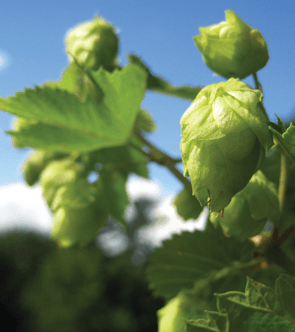
Like many avid homebrewers, I soon found myself growing hops as a hobby that sprung from the joys of homebrewing beer. I got Cascade rhizomes from a coworker at a brewery I was working at and once planted they really took off.
I planted the hop rhizomes at the base of my grandmother’s blue spruce tree to allow the tree to become my trellis for the hops to grow on using minimal effort. By the third year I had a sufficient hop harvest to brew a 5-gallon (19-L) batch of my roasted sweet potato pale ale using fresh Cascade hops that I grew.
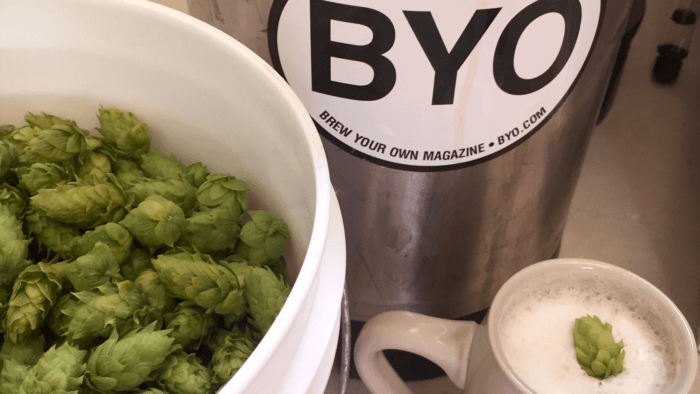
As the years went on the hop plant produced an abundance of hops to brew with and I was soon making several fresh-hop (or wet-hop) recipes that utilized the hops shortly after picking and forgoing the drying process hops generally go through. When brewing with fresh hops you need more weight to account for the water in the hop cones as opposed to the normal dried hops (whether as cones or pellets) that are often below 10% moisture content. I like using a factor of 6 and feel that really lines up with IBU calculations if the hops are added during the boil. This means a lot of fresh hops are needed to brew hoppier beers like pale ales and IPAs.
While drinking a homebrew and watching my hopback/whirlpool during its resting phase on a fresh-hop brew day, I pondered over what the actual utilization was given the large amount of hops that were used, relatively short contact time of 20 to 40 minutes depending on the recipe, and as the wort approached or fell below the isomerization temperature of 176 °F (80 °C). I was thinking of utilization not just with the alpha acids and bitterness, but how much hop oils and terpenes were left in the hops for flavor and character. With these questions and plenty of spent hops in hand, it was time to brew an experimental spent-hopped beer!

Recipe Idea
I assumed that the character of the spent hops would be delicate and would lend itself well to a lighter style hoppy beer. The first style to come to mind was an English bitter. Special bitters are known for lower alcohol content around 3.8–4.6%, with 4% being a great middle target. Special bitters and higher gravity strong bitters (4.6–6.2% ABV) use lower alpha acid hops like East Kent Goldings, which are rich in oils that pack a beer with hop flavor, aroma, with a clean bitterness. This was my inspiration for this project. While hoppy beers are usually the topic when it comes to brewing with fresh hops, don’t be afraid to try using spent fresh hops in other styles. I can imagine doing so in future batches with something like my favorite helles or Pilsner recipe.
Method of Brewing with Fresh Spent Hop Cones
When using wet hops that are freshly picked off the hop bine, the majority of brewers — whether homebrewer or professional — choose the easiest option to add the whole leaf hop cones to the mash tun to act as a hopback or whirlpool. This makes for easy cleanup and you can use a ridiculous amount of hops to extract a unique hop character. Also, by using your mash tun you can easily maximize wort recovery to your fermenter by using the false bottom to aid with wort drainage.
Over the years I guessed my original alpha acids of my homegrown Cascade hops to be about 6% (this is anecdotal based on about 20 years of experience brewing on a home and professional scale) and assumed only 2% alpha acids remaining in the spent hops. I continued to harvest homegrown hops and brew the sweet potato pale ale fresh-hop beer followed by the spent-hop English bitter for five consecutive years. After a few batches of brewing with spent hops I believe this reduced alpha acid percent of about 2% to be correct or close enough without paying for an analysis.
My current boss at Lindgren Craft Brewery remembered these 5- and 10-gallon (19- and 38-L) homebrew batches that I made every year during hop harvest and once we had our own brewery we decided to give it a try on a commercial 3-barrel scale. The idea was to collect the spent hops in 5-gallon (19-L) buckets to hold for the next batch. That year we brewed two 3-barrel wet-hop IPAs using Newport and Comet varieties, which led to a lot of spent hops to reclaim. Following each wet-hop brew we collected the spent cones in buckets that we sealed and placed in the refrigerator to brew with for a second time the next day.

The following day, the spent hops were added as a whirlpool addition when the wort was below isomerization temperature, around 170 °F (77 °C). After the boil was complete, I immediately transfered the wort from the kettle to the mash tun loaded with spent hop cones and noticed that the temperature went from 212 °F (100 °C) down to 184 °F (84 °C) once everything was in the mash tun. If adding spent hops stored in the refrigerator then you will see a more drastic drop in temperature, so I’d recommend allowing them to come to room temperature first.

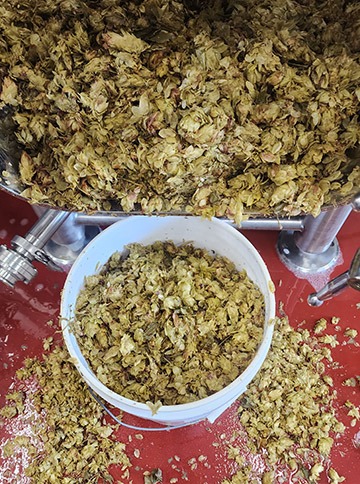
Once the spent hops and wort were in the mash tun we used a pump to recirculate the wort and help keep the floating hop cones submerged and moving for maximum interaction between the hops and wort. The goal is to try and remove all the oils from the hop cones and get them suspended in the wort. During recirculation the lupulin will come out of the cone and you will see little yellow balls all throughout the wort, the majority of which make their way to the fermenter. When using spent fresh hops starting at room temperature with a 40-minute whirlpool recirculation we saw the starting temperature around 184 °F (84 °C) and finishing around 170 °F (77 °C). For homebrewing, an occasional stir here and there to help mix the hops and extract the leftover oils into the wort is suggested. Also, with smaller homebrewing equipment you might see faster temperature losses than we did on our commercial equipment, which might dictate how long you can whirlpool the hops in your target temperature range.
Mash Hopping
For some extra fun you can add a portion of your spent hops to the mash, which is said to help release thiols and aid in biotransformation. It is said that you get roughly 20% of the IBUs that you would get during a 60-minute boil from mash hop additions. If you choose, you can build that into your recipe.
Flavor & Character
The hop flavor and character will significantly depend on many factors like hop variety, age of the hop plant, original recipe followed by the spent-hop recipe, amount of hops used, and all other brewing techniques used to produce the beer. As a hop plant grows throughout the years it will become a heartier plant that produces better quality and quantity of alpha acids and hop oils. We have seen this happen at our local commercial hop farm over the last five years. One thing that is constant is the soft, delicate hop character contributed from hops on their second use, which is just delightful. For this particular batch at the brewery, we used spent hops from two fresh-hop IPA batches we brewed just to see what would happen. Because we harvested all of the spent whirlpool hops to use in the next batch we just used that base hop weight prior to brewing and did not account for any wort absorption. Even if measuring out spent hops for a bittering addition, just keep it simple and use the weight as is. We are estimating roughly 2% alpha acids left in the spent hops so there is plenty of room for variance.
When calculating the spent hop weight we used 72 pounds of spent hops (as was written in the previous recipe) in the whirlpool in 110 gallons, or 0.65 lbs. per gallon (78 g/L) of post-boil wort and it had a unique, soft jalapeño pepper character with no heat. This was the first time I experienced this character and attribute it to using more hops than I would normally use, however customers told us they enjoyed the flavor and it sold out quickly. In all subsequent brews I have just used one batch of spent hops into another batch (5.3 oz./gallon or 39 g/L).
Homebrewing vs. Commercial Brewing
A major difference between homebrewing and commercial brewing a wet-hop beer is how you source your hops. If you are commercially brewing on smaller equipment like a barrel or two you might have enough hops if you are growing them yourself, but beyond that you will need to find a commercial source due to the amount needed for your recipe. Another commercial option is to plan the brew ahead with local homebrewers that grow their own to get an estimated expected harvest. With enough participants harvesting various varieties they grow you might be able to acquire enough hops to brew a wet-hop beer, then the spent-hopped beer. For commercial brewing we have been told by our cattle farmer that when we put the spent hops in the grain bins the cows don’t like it and don’t eat it. We were asked to find a way to discard the hops and not add them to the spent mash. Just like with homebrewing, we take the spent hops and add them into empty malt bags to throw out. Everything else on the brewing side is pretty much the same for homebrewers and commercial brewers, just on different size equipment.
Wet Hop Availability and Sources
For brewing with fresh wet hops the best option is to grow your own. I understand that this is not an option for some homebrewers, and it’s rarely an option for commercial breweries. For homebrewing, you can plan to pair up with other local homebrewers that do grow their own hops and see if you can harvest the spent hops from their batch to use in your beer. Some hop suppliers offer fresh hops around harvest season in August-September. You might have to pre-order them, so as soon as they are harvested they can be shipped to you immediately. In today’s world with the internet you have many companies, locations, farms, and hop varieties to choose from for your fresh hop needs.
I am a huge fan of supporting local hop farms. Many states have hop farms that are enthusiastic about their products and love hearing from homebrewers. What is your closest hop farm? Do you have multiple hop farms in your state, or even in a neighboring state? Look up their website and see what they have to offer for varieties and then contact them to check the availability of fresh hops, expected harvest time, pricing, as well as shipping or pickup options.
I have worked at breweries before where we had fresh wet hops shipped in overnight from the Pacific Northwest and while they were excellent products, the less time between harvest and brewing with the wet hops, the better. Homebrewers who grow their own hops have a great advantage here. Luckily for us, GEMS Hop Farm is right down the road from us, which allows us to visit the farm and closely monitor the upcoming harvest schedule as well as participate in harvest. It was the same involvement I had when I was growing the backyard hops myself and brewing with them only hours after harvesting.
We have noticed that after harvest if you place the hops in the freezer and wait three days to brew you can see up to a 6% loss in weight. I sincerely feel that the moisture that is evaporated in freshly harvested hops will affect the overall character. Not necessarily for the worse, just different.
Spent Fresh Hops vs. Spent T-90 Pellet or Dried Whole Cones
To be honest, I have only ever reused spent hops following a wet-hop brew day; however, I see no reason why this technique should only apply to fresh hops. If you wished to get two turns out of T-90 pellets or whole dried hop cones, you could place the hops in a bag in the kettle on your first brew and reuse the spent hops again for your next batch.
Spent-Hop Recipes
Spent Hop ESB
(5 gallons/19 L, all-grain)
OG = 1.048 FG = 1.010
IBU = 22 SRM = 5 ABV = 5%
Ingredients
9.5 lbs. (4.3 kg) Crisp Maris Otter pale malt
5 oz. (135 g) acidulated malt
3 g gypsum
18 oz. (0.5 kg) spent fresh Cascade hops (first wort hop)
16 oz. (0.45 kg) spent fresh Cascade hops (whirlpool)
½ tsp. Irish moss
½ tsp. yeast nutrient
LalBrew Nottingham yeast
Step by step
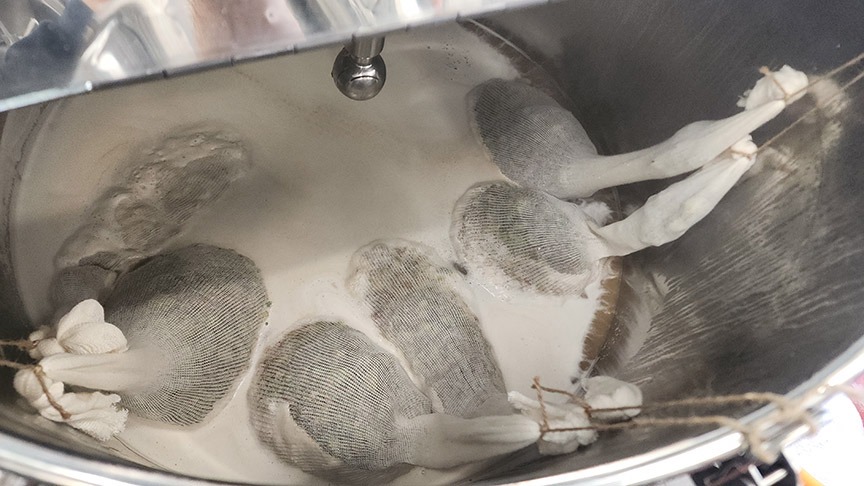
Mash in Maris Otter malt at 150 °F (66 °C) with roughly 3.25 gallons (12.3 L) of water. Add gypsum, take a mash pH reading and adjust if needed to 5.3. Rest mash for 1 hour, recirculate/vorlauf for 30 minutes or until wort is clear, sparge with 4 gallons (15 L) of 172 °F (78 °C) water, then lauter to target a preboil volume of 6.5 gallons (26.5 L). Add 18 oz. (0.5 kg) first wort hops to kettle in bags, then boil for 60 minutes. At 15 minutes, add the Irish moss and yeast nutrient. Add 16 oz. (0.45 kg) spent fresh wet hop cones to the clean mash tun, and at the end of the boil transfer the wort to the mash tun to rest for 30 minutes. Stir occasionally.
I like using English ale strains, however feel free to use your favorite IPA strain. Ferment at the suggested yeast strain temperature. Ferment until final gravity has been reached, usually within 7 days, and do a diacetyl rest. Cold crash and package at 2.65 volumes CO2.
Extract Version: Replace the grains and gypsum with 6.6 lbs. (3 kg) Maris Otter liquid malt extract. Bring 6 gallons (23 L) of water to a boil and turn off heat. Stir in the malt extract, return to a boil, and follow the remainder of the all-grain recipe.
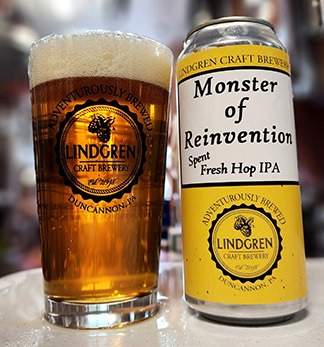
Lindgren Craft Brewery’s Monster of Reinvention clone
(5 gallons/19 L, all-grain)
OG = 1.048 FG = 1.010
IBU = 19 SRM = 5 ABV = 5%
Ingredients
6 lbs. (2.7 kg) Crisp Maris Otter pale malt
2.8 lbs. (1.3 kg) Rahr pale ale malt
9 oz. (255 g) Gambrinus honey malt
3.2 oz. (90 g) acidulated malt
4 g gypsum
2 g calcium chloride
18 oz. (0.5 kg) spent fresh Newport hops (mash hop)
6 oz. (170 g) spent fresh Newport hops (first wort hop)
6 oz. (170 g) spent fresh Comet hops (first wort hop)
32 oz. (907 g) spent fresh Newport hops (whirlpool)
32 oz. (907 g) spent fresh Comet hops (whirlpool)
½ tsp. Irish moss (15 min.)
½ tsp. yeast nutrient (15 min.)
LalBrew New England, White Labs WLP066 London Fog, or Omega Yeast OYL-011 (British Ale V) yeast
Step by step
Mash in grist and mash hops at 150 °F (66 °C) with roughly 3.25 gallons (12.3 L) of water. Based on our brewery water analysis the recipe calls for adding 4 g gypsum and 2 g calcium chloride to the mash to reach calcium 103 ppm, sulfate 100 ppm, and chloride 50 ppm. Once all mashed in, take a mash pH, and adjust pH to 5.3. Rest mash for 60 minutes, recirculate/vorlauf for 30 minutes or until wort is clear, sparge with 4.5 gallons (17 L) of 172 °F (87 °C) water, then lauter to target 6.5 gallons (24.5 L) preboil volume.
Add first wort hops to the kettle in bags, then boil for 60 minutes. At 15 minutes, add the Irish moss and yeast nutrient. Add whirlpool hops to the clean mash tun, and at the end of the boil transfer to the wort to the mash tun to rest for 40 minutes. Stir occasionally.
Knock out to 72–74 °F (22–23 °C) and pitch yeast. Ferment until final gravity has been reached and then do a diacetyl rest. Cold crash and package at 2.65 volumes CO2.
Partial Mash Version: Reduce the pale ale malt to 1 lb. (0.45 kg) and replace Maris Otter malt with 4.2 lbs. (1.9 kg) Maris Otter dried malt extract. Steep grains and mash hops in 3 quarts (3 L) of water at 150 °F (66 °C) for 45 minutes. Remove grains and hops, add 5.5 gallons (21 L) of water, malt extract, and first wort hops and bring to a boil. Follow the remainder of the all-grain recipe.