English Porter
Porter is a British beer style that occupies an important place in the development of beer, as it was the first real industrial beer style that was widely exported and influential in its heyday in the late 1700s and early 1800s. It led to the development of regional variations in countries bordering the Baltic Sea, Czechia, Germany, America, and elsewhere, as well as the stout family of styles. It died out in England around World War II but was reintroduced in the modern craft beer era after first being resurrected in the United States.
Porter has always been a brown beer, having succeeded the brown beers of London in the early 1700s. It underwent several revisions over time as technology and ingredients changed, as well as consumer preference and legal and economic pressures that affected English beer in general. In the craft era, porter initially split into styles sometimes called brown porter and robust porter to differentiate ingredient usage and balance, but the Beer Judge Certification Program (BJCP) began calling these two versions English Porter and American Porter in 2015. The naming was changed to differentiate between the products called “porter” for competition purposes, and was consistent with other porters being known as “Baltic” or “Czech.”
English Porter is style 13C in the BJCP Beer Style Guidelines, grouped together with Dark Mild and British Brown Ale in the Brown British Beer style category. These beers of varying strength are grouped together due to their similar flavor profiles and balance, not because they share a common ancestry or history. Remember, style categories are used for judging purposes, and do not necessarily imply any further or deeper relationship between styles.
History
I see porter as a family of beers starting in England in the early 1700s when it was a more heavily hopped and aged version of the brown beer popular at the time. By the start of the 1800s, it had become highly popular and was made and exported in large quantities in the first industrial-scale breweries of the day. Its formulation changed several times as developments in brewing knowledge, technology, and ingredients were applied. It finally fell out of favor in the first half of the 1900s as industry-wide pressures from two world wars lowered gravities and made the beer indistinguishable from other products.

During the time when porter was popular, variations were made in several regions around the world, including the United States. George Washington is said to have been quite a fan of porter, and porter brewing was popular until the time of Prohibition, when only a few lager derivatives persisted as what I call the pre-Prohibition porter style. Other versions in Europe were lager variations in Germany and Czechia, as well as the Baltic porter style popular in several countries where it is made mostly as a lager (with a few notable exceptions). Of course, the larger version of porter, known as stout porter, led to the development of the stout family of styles.
At the start of the modern craft era, porter was rediscovered at Anchor Brewing Co., which first brewed a version in 1972. This version led to the modern American porter style. Rediscovery in the British Isles happened a little later in the late 1970s, and grew slowly. This rediscovery is what is known as English porter today.
The various types of porter are often sold as just “porter,” but the style guidelines that exist for competition judging purposes differentiate them due to their sensory profiles. Those enthusiasts exploring the style should be on the lookout for the nuanced differences in the types, such as ingredient flavors, intensities, and overall balance. Be aware of the different names and terminology used since this extra information helps when discussing these beers today.
Sensory Profile
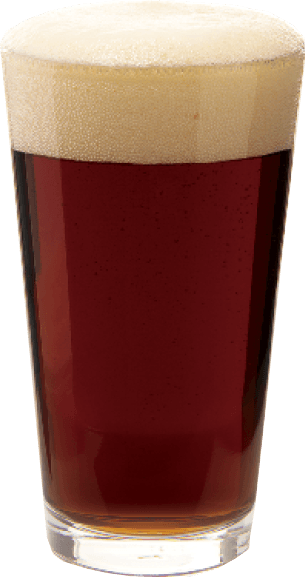
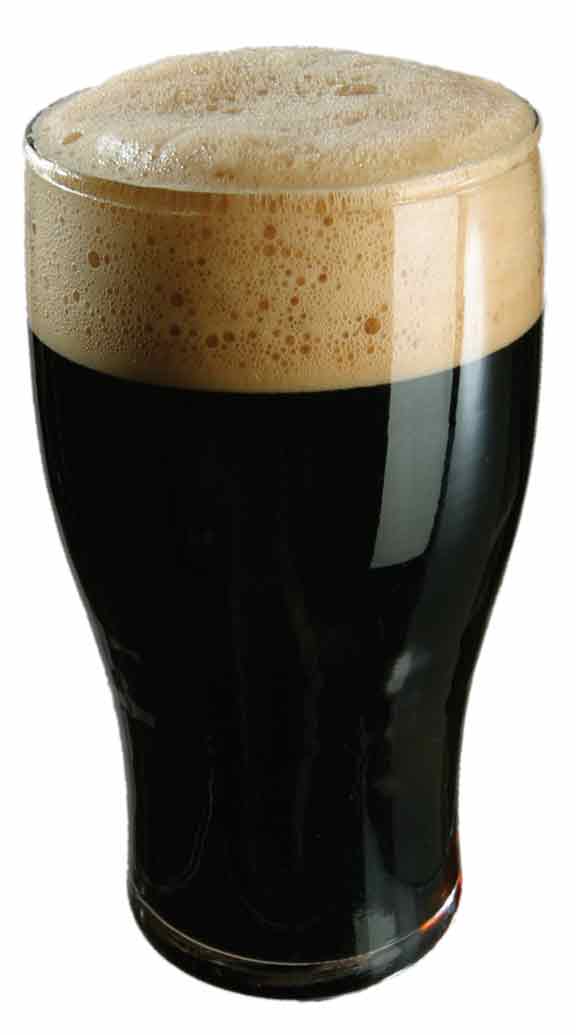
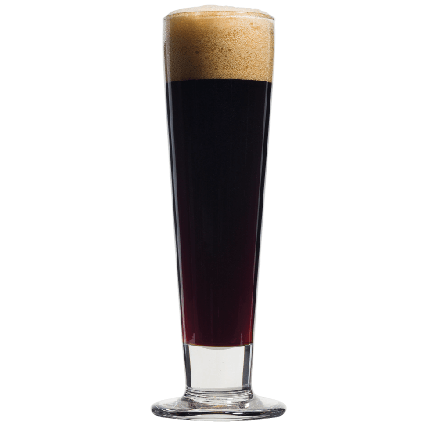
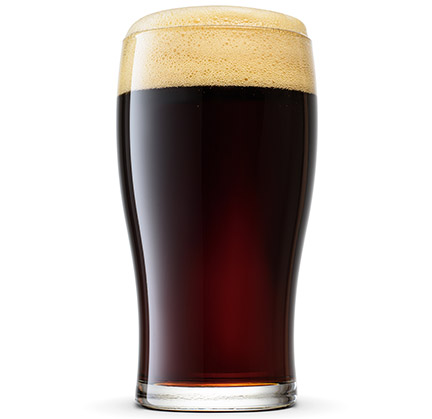
Porter has always been a dark brown beer, not a black beer (like most stouts), which is one reason why I don’t like calling them “brown porters.” The color can vary in intensity, but English porters are generally not as dark as American porters or stouts. They can be opaque, but if not, should be clear. A low off-white or tan head is common, generally not as dark or persistent as in stouts.
As modern porters go, the English porter can be a little lighter in color (but still brown) and a little less roasty in flavor with more of a chocolate and caramel flavor, typically. The malt can have a toffee or nutty aspect, but is usually not burnt or strongly roasted. American porters can get roastier. The base is typically English malt, so think of bready, biscuity, and toasty flavors rather than neutral grain or dough.
The bitterness level is medium to medium-low and can have a dry to lightly sweet finish. Bitterness, as well as flavor and aroma from hops are generally lower in English porter compared to the American version, and usually reflect English varieties with their earthy or floral notes. The intensity is usually low to moderate, but late hops are more of a background character in this style.
English porter can have more of a yeast character than the American, with light to moderate fruity esters and even a trace of diacetyl, as long as it complements and enhances the caramel flavors. Fruitiness does not have to solely be from fermentation esters; caramel malts or brewing sugars can supply some dark or dried fruit notes, as well as caramel complexity.
The body of a porter should be lighter than in a stout, usually medium-low to medium in body. Carbonation can vary, with bottled products often having a higher carbonation than draft versions. There may be some creaminess, but not as much as in stout. Alcohol warmth shouldn’t be noted, as the beers are rarely much over 5% ABV today.
The style is somewhat broad, and allows for some interpretation by brewers. I usually think of how it evaluates compared to its closest neighbors, which is one reason why I keep comparing it to American porter and stout (typically Irish stout). English porter has some similarity in flavor with dark mild, but is stronger and usually more bitter. It has more richness and roast than British brown ale, but has similar strength. When I judged the medal round of this style recently at the Great American Beer Festival, the most common problem was with the examples having the balance and flavor profile of one of these related styles more so than that which I just described.
Brewing Ingredients and Methods
Porter is an English style, so it uses English methods and ingredients. As I mentioned, the choice of malt, hops, and yeast should be English or British, and the mashing technique will be a single infusion mash. Some British brewers might use parti-gyle techniques, but that is more of a variation of infusion mashing to produce multiple beers than anything. Conversion in the “normal” range of 151–153 °F (66–67 °C) is appropriate since we aren’t looking for extremes.
The base malt for a porter is English or British pale ale malt. Maris Otter is a common choice, but I don’t think it’s necessary to use something this distinctive when the dominant flavors will be coming from specialty grains. Less expensive pale ale malts are certainly acceptable, but I would use a maltster from the British Isles if possible.
If I were to spend my money on ingredients that drive the flavor, I would look at the character malts. Here is where I like to use British chocolate malt, crystal malt, and brown malt. These products can have significant differences in flavor and color between maltsters and sources, so you may need to experiment to find ones that you like.
Historically, porter was originally all brown malt, but that was in the day when brown malt had some diastatic power. Later, porter became a blend of pale, amber, and brown malts. After the invention of black malt in 1817, darker malts became a color source. After 1880, crystal malts and sugars became legally permissible to use. This context helps explain some historical recipes you may find where the malt choices reflected what was available and legal at the time. In the craft era, most commercial grists are at least 60% pale malt (often 80% or more), with the remainder being crystal and chocolate malt. Brown malt is rare, but a flavor driver in a few of the best-known examples (Fuller’s and Samuel Smith’s, for sure). Rarer adjuncts used include black malt, roasted barley, wheat, and possibly brewing sugars.
Terry Foster, writing in the classic style series book Porter, said in 1992 that the American Homebrewers Association styles for competition differentiated between a robust porter that used black malt, a brown porter that used chocolate malt, and a dry stout that used roasted barley. While he said he preferred to think of the style as having a continuum of roasted flavors, he does pinpoint when the differentiation came into use. I think this is too much of an oversimplification, although it does help identify some of the major flavor components differentiating the styles.
Historical porters from the early 1800s are described as vinous and being aged, similar to how you might think of Flanders red ale being produced at Rodenbach. The character described can only be coming from Brettanomyces (which translates as “British yeast,” after all). However, this historical aspect is not present in modern versions.
The bitterness level for this style can vary, but is generally no more than moderate. Late hops are restrained, and normally feature English varieties such as Fuggle, Goldings, Challenger, Northdown, and Target. Continental varieties would likely work as well, but I would avoid anything blatantly American or New World with citrusy, dank, or overly resiny character. You want to avoid clashes between the darker malts and the hops.
The yeast choice is typically a somewhat fruity or malty English strain. Prominent esters aren’t an objective, but having some in the mix is desirable. A barely perceptible amount of diacetyl is allowable, if it blends in with the caramel and esters to give a more rounded flavor. But the beer should not be overtly buttery, nor should it have a phenolic character that might clash with darker malts.
Homebrew Example
My example is in the style of Fuller’s London Porter, in that it uses brown malt as a flavor component, but I’m not making an outright clone. My recipe uses non-traditional Munich malt to boost malt flavor without increasing residual sweetness, and the balance and hopping are a bit different. Chocolate and crystal malts play an important role in the flavors that I always look for in these types of porters.
I’m using a straightforward single infusion mash without looking for something particularly dextrinous as the result. As is my style, I add the crystal and chocolate malts at the end of the mash while starting my recirculation. The other grains must be converted in the mash. For proper extraction, be sure to recirculate at least 15 minutes and then slowly sparge to extract their color and flavor properly. If your system doesn’t allow for this method, you can add them to the mash but you may need to monitor your mash pH to keep it in a desirable range (5.1–5.3).
My hop choices are traditional, using Goldings and Fuggle. I’m looking for a balanced bitterness that still yields a malty finish, with the late hops being subtle. Choosing the Wyeast 1968 (London ESB) yeast is a nod to Fuller’s, as this is their strain. It gives a clean flavor while providing some tasty esters, and drops very bright allowing for a clear finished beer.
I avoid sulfates and carbonates in my water profile, preferring the softer and rounder chloride as my calcium source.
The objective for this beer is an honest, refreshing pint suitable for an after-work quench. I look for the malty and flavorful base without an overly bitter or sharp finish. Hops are in support of the malt, and the malt flavor is what carries the beer. This style is increasingly hard to find, which is another good reason to be a homebrewer.
English Porter, All-Grain
(5 gallons/19 L, all-grain)
OG = 1.053 FG = 1.015
IBU = 28 SRM = 30 ABV = 4.9%
Ingredients
7.1 lbs. (3.2 kg) U.K. pale ale malt
1.25 lbs. (0.57 kg) U.K. brown malt
1.25 lbs. (0.57 kg) U.K. crystal malt (60 °L)
1 lb. (0.45 kg) Munich malt
10 oz. (283 g) U.K. chocolate malt
6.8 AAU Fuggle hops (60 min.) (1.5 oz./43 g at 4.5% alpha acids)
0.5 oz. (14 g) Goldings hops (10 min.)
Wyeast 1968 (London ESB), White Labs WLP002 (English Ale), Imperial Yeast A09 (Pub), or LalBrew Windsor yeast
3⁄4 cup corn sugar (for priming)
Step by Step
This recipe uses reverse osmosis (RO) water. Adjust all brewing water to a pH of 5.5 using phosphoric acid. Add 1 tsp. of calcium chloride to
the mash.
This recipe uses an infusion mash. Use enough water to have a moderately thick mash (1.5 qts./lb.). Mash in the base malts (pale, Munich, brown) at 153 °F (67 °C) and hold for 60 minutes. Add the crystal and chocolate malts, stir, begin recirculating, raise the mash temperature to 169 °F (76 °C), and recirculate for 15 minutes.
Sparge slowly and collect 6.5 gallons (24.5 L) of wort.
Boil the wort for 75 minutes, adding hops at the times indicated in the recipe.
Chill the wort to 66 °F (19 °C), pitch the yeast, and ferment at this cool-ish temperature, as a clean profile is the goal.
When fermentation is complete, rack the beer, prime and bottle condition, or keg and force carbonate.
English Porter, Extract with Grains
(5 gallons/19 L, extract with grains)
OG = 1.053 FG = 1.015
IBU = 28 SRM = 30 ABV = 4.9%
Ingredients
6.2 lbs. (2.8 kg) light liquid malt extract
1.25 lbs. (0.57 g) U.K. crystal malt (60 °L)
10 oz. (283 g) U.K. chocolate malt
6.8 AAU Fuggle hops (60 min.) (1.5 oz./43 g at 4.5% alpha acids)
0.5 oz. (14 g) Goldings hops (10 min.)
Wyeast 1968 (London ESB), White Labs WLP002 (English Ale), Imperial Yeast A09 (Pub), or LalBrew Windsor yeast
3⁄4 cup corn sugar (for priming)
Step by Step
Use 6.5 gallons (24.5 L) of water in the brew kettle; heat to 158 °F (70 °C). Turn off the heat. Add the crystal and chocolate malts in a mesh bag and steep for 30 minutes at this temperature. Remove grain bag, allowing to drip into the kettle.
Add the malt extract and stir thoroughly to dissolve completely. Turn the heat back on and bring to a boil.
Boil the wort for 60 minutes, adding hops at the times indicated in the recipe.
Chill the wort to 66 °F (19 °C), pitch the yeast, and ferment until at this cool-ish temperature, as a clean profile is the goal.
When fermentation is complete, rack the beer, prime and bottle condition, or keg and force carbonate.