Exploring Unique Grains
Two pro brewers share their approach to brewing with non-traditional grains including sorghum, amaranth, and black rice.
Leo Sawadogo: Montclair Brewery

Leo Sawadogo was a homebrewer for over a decade before he and his wife, Denise, opened Montclair Brewery in New Jersey in 2018
Brewing with unique grains is all about expanding your mind and then trying to explore a different horizon in brewing. It’s about not being afraid to try different things and get out of your comfort zone, and then making something unique. When I travel to another country the first thing to do is go to the local market and look to see what ingredients are available and then try all these ingredients in foods while thinking about how they would work in my beer. And growing up in Africa, I remember certain tastes that I want to recreate here. Grains like fonio are a food staple in Africa, but nobody uses it for beer there. A lot of people come to our brewery to try those kinds of beers with these unique flavors.
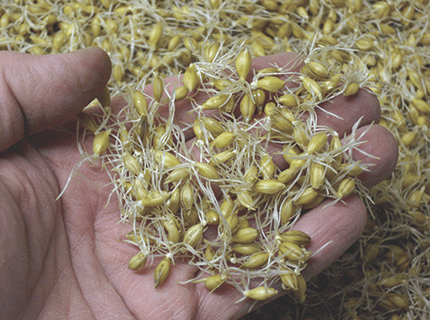
Sorghum is the most widely available grain in Africa and is commonly used for brewing (done by the women in each household). I remember my mother would soak the sorghum for at least two days to malt it and then spread it out and dry it before using it to brew the beer. Growing up watching her always made me want to do that. Now we make a sorghum beer, but I get malted red sorghum imported from Africa. Sorghum provides a very unique flavor that is difficult to describe as it doesn’t taste quite like anything else. It’s gluten-free, so we brew it in a different area and use 100% sorghum for customers looking for gluten-free options. Sorghum requires a few unique steps. First, you have to mill it very fine into a powder. It also requires enzymes to get to the sugars and help avoid a stuck mash, such as Ultra-Ferm®, a liquid amyloglucosidase enzyme that hydrolyzes dextrins into fermentable glucose. It also requires a healthy dose of rice hulls to avoid a stuck mash. We put these at the bottom of the mash and then the sorghum on top. I keep the hops low, allowing the sorghum flavor to shine.

I’m inspired by traditional African beer, but as a pro I do things a bit differently. They actually boil the beer for up to three days, which is partly because that is the tradition and how they’ve been taught, but it may also be because they don’t use enzymes so it needs a longer boil. I do a traditional one-hour boil and then cool and pitch kveik yeast. I believe Norwegian kveik is actually similar to the yeast in Africa, where fermentations are finished in three days.
A while back we brewed a beer in collaboration with Allagash Brewing that used amaranth because a farmer in Maine had some available. Jason Perkins at Allagash said we should get out of our routine with the usual stuff and make something different. And I’m like, yeah, why not? I myself had wanted to brew with amaranth for a long time. We had to mash the amaranth first. I don’t recall the exact temperature, but believe it was in the 140s °F (low-mid 60s °C). The grain worked well, and provided a distinct crispness to the beer. I don’t think it contributed much in the flavor of the overall beer because amaranth is a pretty neutral grain, but it provided a clear color and a crispness.
In the near future, I’m looking at brewing more with less-common brewing grains including fonio, couscous, and quinoa.
As a homebrewer, if you come across a new grain, I’d recommend a simple recipe. The reason you’re using a unique grain is to try to discover its flavor in beer, so try not to overpower its contributions. Probably start with a small batch using 10–20% of the new grain and then try to see what flavor is going to come out of it. Don’t get stuck trying to brew a particular style. Just make beer.
Damien Martin: Dangerous Ales
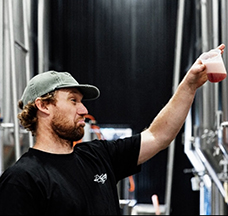
Damien Martin is a trained chef who fell in love with fermentation, leading him to open Dangerous Ales in Milton, New South Wales, Australia in 2019.

One of the more interesting grains we’ve used is black rice (also called forbidden rice) in a dark lager. While most rice used in lagers is fairly neutral in flavor and purely added for fermentables, black rice has a very unique flavor profile. It’s not just about the color; it brings complexity and subtle grain-driven character that you don’t typically get from standard rice varieties. I’d describe it as a soft, grainy nuttiness and with a slight earthy undertone, which adds layers rather than just boosting alcohol or lightening body.
Black rice gelatinizes at a higher temperature than barley malt, which requires a cereal mash to access the starches. I mashed in at 113 °F (45 °C) and held for 10 minutes, adding a small amount of barley to generate enzyme activity. I then boiled the black rice for 20 minutes before adding it into the main mash at a slightly cooler-than-usual strike temperature to account for the heat from the cereal mash. It is a similar method used for any rice — I’ve previously brewed a jasmine rice lager that included the same steps — the main difference is the color and flavor black rice contributes.
Anywhere between 10–20% of the grain bill works well, depending on style. Any higher and you may start impacting mouthfeel and head retention, or need to compensate with additional enzymes.
For anyone who is interested in brewing with black rice for the first time, I’d recommend starting with lagers or porters, as the sugars are fully fermentable and suit styles that allow the rice character to subtly come through.
To date, our Black Rice Lager is the only recipe we’ve brewed with it, but it’s a fun ingredient. Based on that experience, one recommendation for homebrewers experimenting with it would be running the rice through a mill to crack it open. It’s not essential, but it helps speed up the cereal mash process.