Mash Hopping
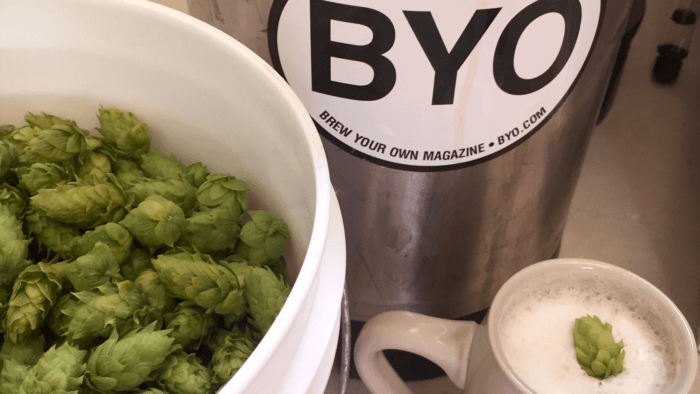
Hops have been used as a preservative and bittering agent in beer for well over 600 years. While hops are most often used in the boil, the U.S. craft beer revolution and rise in popularity of India pale ale has seen broad use of hops in the whirlpool and for dry hopping. But what about adding hops to the mash?
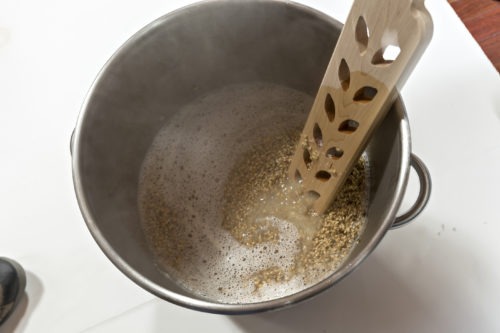
It is remarkably easy to add hops at the start of your mash. At mash temperatures, some bitterness will be extracted as they steep. Mash hopping at a typical mash temperature of 156 °F (69 °C) for 60 minutes will give you approximately the same utilization as a whirlpool addition at the same temperature and time. The utilization is quite low, however, typically around 10% of that achieved during an equivalent boil. So, a 60-minute mash won’t yield a lot of bitterness, but it may have other benefits.
Mash Hopping History
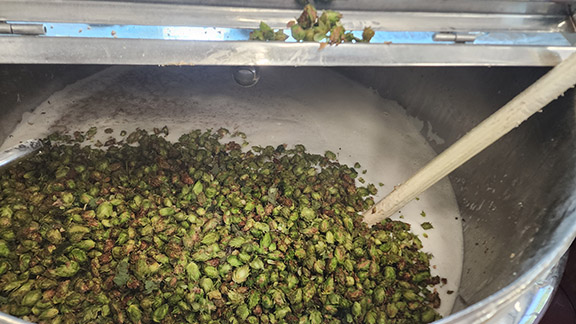
Mash hopping has a rich history, being widely used in lighter styles like lagers, pale ales, and Pilsners in the last 150 years to create a subtle bitterness without the harshness that might come from boiling hops. Going even further back, it was not uncommon to simply add grains and hops in the mash and skip the boil altogether when brewing.
Mash hops did show up occasionally in homebrew recipes from the 1970s and 1980s, as homebrewers tried to use historical techniques to create older beer styles. The practice fell out of favor by the early 1990s as Glenn Tinseth, Greg Noonan, Mark Garetz, and others developed equations for estimating the bitterness of hops used in the boil. Labs also made it easier to measure IBU levels. The net result was that brewers realized that utilization of hops in the mash was quite poor at the 10–20% level compared to a boil, and mash hopping seemed an expensive waste in comparison.

Mash hopping faced another nail in the coffin in the early 2000s as the IPA revolution was taking off and brewers began to focus more on hop aromatics. Because all aromatic oils in a hop cone are volatile, meaning they boil off in a short period of time, brewers began focusing on early boil bitterness additions and then late hop additions for aromatics. Any aromatics from mash hops are effectively lost in a 60–90 minute boil once the mash is complete. The combination of poor utilization and no aromatics effectively killed mash hopping as a technique for many years.
However, that has changed in recent years as more advantages have been discovered.
Mash Hopping for Beer Stability
Having long been a skeptic of mash hopping, I was intrigued when Scott Janish, Co-Owner of Sapwood Cellars (Columbia, Maryland) joined me for a recent podcast episode (BeerSmith Podcast, Episode #305) to discuss mash hopping. Scott said he has recently been using a mash hop addition in many beers at Sapwood Cellars to improve the long-term stability of packaged beer and he covers this technique briefly in Chapter 14 of his book The New IPA.
The basic concept is that the acids and polyphenols in the hops react with metals present in the mash. Malts all contain low levels of iron, copper, and manganese. While the metals alone are not necessarily a problem, these metals can combine with oxygen in a finished beer. The combination of metals and oxygen creates compounds that are highly reactive with other compounds in beer, leading to rapid staling as the beer ages. Reducing the metals, along with careful oxygen control throughout the brewing process, can significantly improve the shelf life and flavor stability in a finished beer.
In The New IPA, Janish discussed studies that combined alpha and beta acids from hops with various metal ions and then measuring changes in concentration.1 Hop acids were found to be most effective in reducing concentrations of iron and copper, but not terribly effective at reducing magnesium, manganese, calcium, or zinc levels. Alpha acids in the hops were found to be more effective than beta acids or isomerized alpha acids, suggesting that higher alpha hops used in the mash, before isomerization in the boil, were most effective in reducing iron and copper levels.

A study by Zufall and Tyrell showed that manganese has the largest impact overall.2 They did a series of experiments adding copper, iron, and manganese at various stages and found that manganese had a larger impact than copper or iron in oxidation of the finished beer. Since manganese, copper, and iron in the mash are primarily driven by the grains used, malt selection is also a consideration here.
Janish recommends a hop rate of approximately 0.5 oz. (14 g) per gallon (3.8-L), or about 2 lbs./barrel for commercial sizes to reduce metals.
While mash hopping has been shown to reduce iron and copper levels, and therefore improve long-term beer stability, it needs to be combined with an overall strategy for reducing oxygen levels at every phase in the brewing process. Mash hopping will only be effective if you have processes in place to reduce oxygen exposure, particularly post-fermentation, through steps like oxygen-free beer transfers, oxygen-free dry hopping, and carefully controlled packaging and bottling.
Mash Hopping to Enhance Fruity Flavors (Thiols)
Considerable research has been done to understand and enhance hop flavor and aroma. With the popularity of New England (hazy) IPAs, there has been a push to both select hops that feature tropical flavors and enhance the impact of those flavors in the finished beer. We’ve also seen a concerted effort to understand, categorize, and maximize the impact of all the hop aroma oils.
Research into hop compounds has highlighted the importance of thiols in creating tropical flavors and aromas in beer. Thiols have been researched for some time in the context of wine, as they play a major role in the flavor profile of many popular styles such as Sauvignon Blanc. However, thiols are present in many hop varieties and malts, and play a significant role in beer aroma and flavor. To maximize the impact of thiols for styles like hazy IPA, there has been a resurgence of interest in mash hopping used in combination with specific, often genetically modified, yeast strains to free more thiols to create a big, fruity aromatic finish in the final beer.
What Are Thiols?
Chemically, a thiol is a sulfur version of alcohol. Where alcohols have an -OH group in their structure, thiols have a -SH group. Though thiols make up an incredibly small fraction of hop compounds, many of them are highly aromatic. They are so aromatic that most can be detected at levels measured in nanograms per liter. Aromas vary from tropical fruits to citrus and garlic. There are a variety of thiol compounds in hops, but researchers have focused on the “big four”: 3SH/3MH, 3S4MP/3M4MP, 4MSP/4MMP, and 3SHA/3MHA, each of which has its own aroma profile.
Breaking down the individual thiol aromas, we have 3SH/3MH, which has grapefruit, citrus, white grape, and gooseberry aromas. Next, 3S4MP/3M4MP has passion fruit, grapefruit, and rhubarb aroma. 4MSP/4MMP has black currant, tomato plant, chive, and, in the extreme, a cat pee aroma. Finally, 3SHA/3MHA has passion fruit, citrus, guava, and body sweat aromas.3
Free Versus Bound Thiols and Biotransformations
Further complicating things, thiols in hops can be either free or bound. Free thiols are aromatic but bound thiols are an odorless precursor that are bound to amino acids. Some bound thiols can be freed during fermentation, but typically only in detectable quantities via specialized yeast engineered to free them. We have many hop varieties that have good concentrations of bound thiols, but these thiols remain bound unless the brewer takes steps to free them. Some pale and lager malts also have bound thiols, in particular 3SH/3MH, that can be freed using selected yeasts.
Biotransformation is a term that describes a variety of chemical processes that take place during fermentation that change one compound to another compound. For many years, brewers have been selecting hops like Citra®, Columbus, and Cascade, which are high in specific compounds like geraniol, linalool, and citronellol that are easily transformed into an aromatic form during fermentation. These provide a great aroma impact on the finished beer and are a major factor in many modern hoppy beers.
However, a second form of biotransformation can occur during fermentation that frees up bound precursor chemicals releasing them in their free aromatic form. This is the biotransformation we are targeting when using mash hops. We select hops high in bound thiols to use in the mash and combine that with specific yeast strains selected to release those thiols during fermentation.
Hops To Use for Maximum Thiol Impact
Lallemand produced a chart showing hop varieties high in various thiols here. I’ve included an extract below:
Hops high in free thiols:
3SH/3MH (Grapefruit): ApolloTM, Galaxy®, Simcoe®, Citra®, Mosaic®
3S4MP/3M4MP (Rhubarb): Nelson SauvinTM, Ekuanot®, Hallertau Blanc, Mosaic®
4MSP/4MMP (Black Currant): Nelson SauvinTM, ApolloTM, Citra®, Galaxy®, Mosaic®, Simcoe®
3SHA/3MHA (Passion fruit): None
Hops high in bound thiols:
3SH/3MH (Grapefruit): Motue-
kaTM, Saaz, Cascade, Citra®, Hallertau Blanc
3S4MP/3M4MP (Rhubarb): Hallertau Blanc
4MSP/4MMP (Black Currant): Nelson SauvinTM, Aramis, Strisselspalt, Mandarina Bavaria, Simcoe®
3SHA/3MHA (Passion fruit): None
Janish also published an excellent post highlighting the research of Aurealie Roland on bound concentrations of thiols found here. In it, Janish includes Roland’s chart of free versus bound thiols, highlighting the fact that 3SH/3MH is by far the largest concentration of bound thiols in many hop varieties. Many of these same hops also had 4MMP precursors. Here is a list of hops containing the highest 3MH precursors (grapefruit) in order of concentration: CalypsoTM, Saaz, Simcoe®, Nugget, Cascade, Hallertau Perle, Hallertau Tradition, Citra®, ApolloTM, Hallertau Nugget, EurekaTM, BravoTM, Hallertau Cascade.
To this list we can add additional work done by Yakima Chief, which published their Survivable Compounds study based on the 2021 crop year and highlighted which compounds survived best in both whirlpool and dry hopping. Included in the list was 3MH/3SH. The hops that did the best include: Cryopop®, Chinook, Krush®, Sabro®, Idaho GemTM, and Comet.
For mash hopping we are primarily concerned with bound thiols, as most of the free thiols will be lost during the boil. We can see from the Lallemand lists that many hops like Hallertau Blanc, Nelson SauvinTM, and Simcoe® have high levels of both free and bound thiols. While the Yakima Chief work was done only using hops in the whirlpool and dry hop phase, it does give us an indication of hops that may also contain bound thiols that can be transformed during biotransformation. However, your best bet might be to start with the Roland or Lallemand list of hops high in bound thiols when selecting hops for mash hopping.
Selecting Yeast To Use With Mash Hopping
Since the mash hopping technique relies on freeing bound thiols via the biotransformation process during fermentation, you need to select the right yeast for this technique to work. Aromatic thiols are bound with amino acid precursors and require specific enzymes from yeast to free them. This depends on specific genes present in the yeast strain.
Some yeasts do a reasonable job processing bound thiols. For example, the Lallemand hop chart mentioned earlier also contains a short list of their best strains for freeing bound thiols. These strains include LalBrew Diamond, Farmhouse, Nottingham, Voss, and Verdant.
To specifically address the issue of bound thiols in hops, some yeast providers have experimented with genetically modified yeast to activate the IRC7 gene and effectively enable β-lyase production (this enzyme frees thiols bound to the amino acid cystein). Omega Yeast was one of the pioneers in this area, launching their Cosmic Punch OYL-402 yeast strain, which is a modified variant of their popular British Ale V OYL-011 strain. This strain that they call a “thiolized yeast” is designed to free bound thiols from their precursors during fermentation, creating a more aromatic fruity finish in the beer.
Omega later launched Star Party OYL-404, a variation of their West Coast Ale I OYL-004 as well as Lunar Crush OYL-403, their first thiolized lager yeast that is a variant of their Mexican Lager OYL-113. Most recently, they launched Helio Gazer OYL-405, which is an even more potent thiolized variant of ale yeast designed for hazy IPAs.
Omega did some experiments with mash hopping as well, and found that using Cascade hops in the mash along with Cosmic Punch delivered a 3SH level almost 10 times the level found using their standard parent strain British V. When they ran the same experiment using both yeast strains and traditional whirlpool hopping, they found approximately a 3x difference in 3SH levels. So, in their experiments, mash hopping outperformed whirlpool hopping for delivering 3SH in the finished beer when using a thiolized yeast strain.4
Other yeast labs have started introducing thiolized strains. Berkeley Yeast offers their “Tropics” line including London, Vermont, and Andechs (low diacetyl) strains designed to free tropical flavors. Escarpment Labs also has a strain called Thiol Libre designed to free thiols. I’m certain other labs are working on additional modified strains to free thiols.
For those who prefer non-genetically modified yeast, can’t get them in homebrew sizes, or because of local laws about GMO, White Labs has their Tropicale Yeast Blend WLP077, which is a non-GMO yeast blend selected to release bound thiols. It again relies on the IRC7 gene, and in side-by-side tests against their standard California Ale WLP001 yeast was shown to release very high levels of 3SHA thiol.5
Mash Hopping for Thiols in Practice
Let’s say you want a fruity, hazy IPA, what would your mash hop schedule and quantities look like? Janish suggests 1–2 lbs. per barrel, which is about 2.5–5 oz. in a 5-gallon batch (or 70–140 g/19 L). For your first attempt, I would stick with a hop variety high in 3SH/3MH precursors like CalypsoTM, Simcoe®, Saaz, or Cascade.
Next, you need to select a thiolized yeast to use. If you are not opposed to genetically modified yeast, I would probably select one of the Omega thiolized strains like Helio Gazer or Cosmic Punch. The best non-GMO option I could find was White Labs Tropicale Blend. Since these yeasts also do a good job biotransforming whirlpool hop additions, I would select a whirlpool hop variety high in 3SH/3MH thiols, and for a hazy IPA it is always appropriate to add a healthy dose of aromatic dry hops.
Is Mash Hopping Worth It?
Given its long history and several modern breakthroughs, I would say that mash hopping has evolved significantly from its roots but is still applicable for modern brewing. Mash hopping as a method for adding just bitterness or to control pH is a poor use of hops, but mash hopping to enhance long-term shelf stability or free thiols can be effective.
If we look at mash hopping as a technique to reduce metals in the finished beer, which slows oxidation and staling, I think the technique is an important one, especially for commercial brewers. While mash hopping won’t fix problems with oxygen that occur later in the brewing process, it can be an important element in enhancing shelf stability in a brewery where you already have good oxygen control processes in place. For homebrewers, the technique is probably less important as many homebrewers’ beers face larger risks from oxygen post-fermentation when transferring and packaging their beer — and correcting these potential issues is a higher priority.
When we explore mash hopping as a technique to enhance fruity flavors in styles like hazy IPA, it looks like a winner. If you select a hop variety high in bound thiols and then combine mash hops with an appropriate thiolized yeast you can get a measurable impact in free thiols and aroma in the finished beer.
References:
1 Janish, S. (2019) The New IPA: Scientific guide to hop aroma and flavor. (pp 207-209). ScottJanish.com.
2 Zufall, C. and Tyrell, Th. (2008) “The Influence of Heavy Metal Ions on Beer Flavor Stability.” J. Inst Brew 114(2), 134-142: www.themodernbrewhouse.com/wp-content/uploads/2016/11/Metals-and-Beer-Stability.pdf
3 “A Thiols Checklist” Hop Queries: www.hopqueries.com/archives/a-thiol-checklist-hop-names-included
4 “All About Thiolized Yeast” Omega Yeast: www.omegayeast.com/all-about-thiolized-yeast
5 “WLP007 Tropicale Yeast Blend – New Thiol Releasing Non-GMO Yeast Blend” White Labs: www./blog.whitelabs.com/wlp077-tropicale-yeast-blend-new-thiol-releasing-non-gmo-yeast-blend