
Bulk lagering vs. package aging
Q: How does lagering a beer in a carboy or barrel affect the beer differently than storing the same unfiltered beer in a bottle or keg at the same temperature for the same period of time?
— Chris Patterson • Downers Grove, Illinois
Mr. Wizard says…
A: This is a great question, Chris, and the answer starts with a quick review of the objectives of lagering. Although lagering is most often associated with lager beer, the process can be applied to all types of beer. Some brewers refer to all aging processes as “lagering,” others use the term “cellaring,” and some simply say “aging.” Naming aside, yeast sedimentation, diacetyl and acetaldehyde reduction, flavor integration, and sulfur scrubbing are among the key changes in beer flavor and appearance that can occur during lagering. In the commercial lager world, lagering may also include partial or complete natural carbonation.
Cask conditioning, while rooted in ale tradition, shares much in common with lagering. One of the key differences between lagering and cask conditioning is volume: Lagering is a bulk process in which the finished beer is later transferred to kegs, bottles, or cans, while cask ales are conditioned in the very vessels from which they are served. Another difference is yeast sediment. Commercially packaged lagers typically do not contain yeast sediment, whereas cask ales generally do.
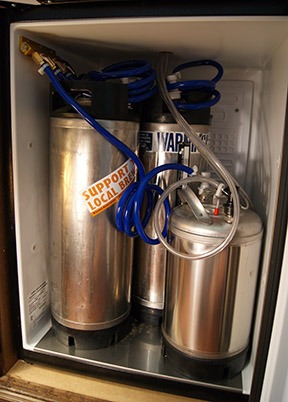
At home, lagering can be done in containers that do not permit carbonation, such as carboys, or in containers that do, such as kegs or certain pressure-rated small fermenters (such as those included in this homebrew unitank comparison). In both cases, beer clarification, flavor maturation, and sulfur volatilization occur. Lagering in a keg allows homebrewers to mimic commercial practices, including kräusening — adding actively fermenting beer to fully fermented beer to achieve carbonation and speed aging. A key part of this process is venting excess gas. While aging in a carboy also allows sulfur venting, keg aging, where CO₂ is naturally produced and released, is my preferred method.

When lagers are aged in bottles, three important things cannot occur: Sulfur scrubbing, yeast sedimentation, and yeast separation. A practical solution for home lager production is to select a yeast strain that produces clean, low-sulfur lagers within a short fermentation and maturation window. Strains such as SafLager W-34/70 can be used successfully at warmer temperatures (59–68 °F / 15–20 °C) by both home and commercial brewers to quickly produce beers with low diacetyl and sulfur. Others, such as LalBrew NovaLager, have been developed through traditional selection and hybridization to yield strains that produce minimal diacetyl and hydrogen sulfide.
As long as the beer is cooled to encourage most yeast to drop out before packaging, you can bottle-condition and age for flavor integration. Is the result identical to bulk-aged lager? Probably not, but it can be surprisingly close.