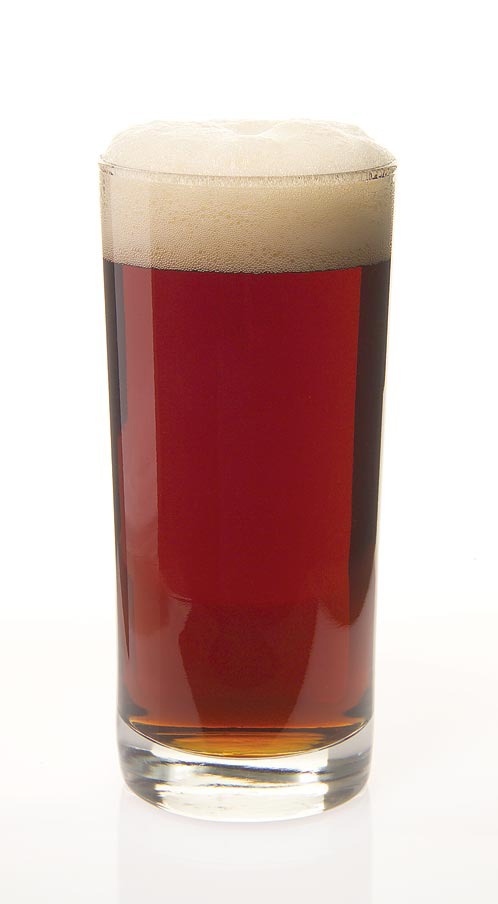
New Zealand Pilsner
This pale lager combines some of the better attributes of Pilsner and Kölsch with intriguing modern New Zealand hops.
New Zealand Pilsner, All-Grain
(5 gallons/19 L, all-grain)
OG = 1.050 FG = 1.012
IBU = 38 SRM = 3 ABV = 5%
This pale lager combines some of the better attributes of Pilsner and Kölsch with intriguing modern New Zealand hops.
Ingredients
5 lbs. (2.3 kg) US 2-row malt
5 lbs. (2.3 kg) German Pilsner malt
5 oz. (142 g) German wheat malt
5.3 AAU Motueka hops (FWH) (0.7 oz./20 g at 7.5% alpha acids)
6 AAU (14 g) Nelson Sauvin hops (10 min.) (0.5 oz./14 g at 12.1% alpha acids)
5.5 AAU Riwaka hops (5 min.) (1 oz./28 g at 5.5% alpha acids)
Fermentis Saflager W-34/70 or Wyeast 2124 (Bohemian Lager) or White Labs WLP830 (German Lager) yeast
3⁄4 cup corn sugar (if priming)

Step by Step
On brew day, prepare your ingredients; mill the grains, measure your hops, and prepare your water. This recipe uses reverse osmosis (RO) water. Add ¼ tsp 10% phosphoric acid per 5 gallons (19 L) of brewing water, or until water measures pH 5.5 at room temperature. Add 1 tsp. calcium chloride (CaCl2) to the mash.
On brew day, mash in all the grains at 149 °F (65 °C) in 16 qts. (15 L) of water, and hold this temperature for 60 minutes. Raise the temperature by infusion or direct heating to 168 °F (76 °C) to mashout. Recirculate for 15 minutes. Fly sparge with 168 °F (76 °C) water until 6.5 gallons (25 L) of wort is collected. Boil the wort for 75 minutes, adding the hops at times indicated in the ingredients list. The first wort hops are added to the kettle just before sparging begins.
Chill to 48 °F (9 °C) and rack to the fermenter. Oxygenate, then pitch the yeast. Start fermentation at 48 °F (9 °C), allowing temperature to rise naturally to 50 °F (10 °C) as fermentation progresses. After fermentation is complete, rack the beer to secondary and lager for 12 weeks at 0 °F (32 °C). Fine the beer with gelatin if needed. Bottle or keg as usual.
New Zealand Pilsner, Extract Only
(5 gallons/19 L, extract only)
OG = 1.050 FG = 1.012
IBU = 38 SRM = 3 ABV = 5%
Ingredients
6.8 lbs. (3.1 kg) Pilsner liquid malt extract
5.3 AAU Motueka hops (FWH) (0.7 oz./20 g at 7.5% alpha acids)
6 AAU (14 g) Nelson Sauvin hops (10 min.) (0.5 oz./14 g at 12.1% alpha acids)
5.5 AAU Riwaka hops (5 min.) (1 oz./28 g at 5.5% alpha acids)
Fermentis Saflager W-34/70 or Wyeast 2124 (Bohemian Lager) or White Labs WLP830 (German Lager) yeast
3⁄4 cup corn sugar (if priming)
Step by Step
Use 6 gallons (23 L) of water in the brew kettle; heat to 158 °F (70 °C) then turn off the heat. Add the malt extract and stir thoroughly to dissolve the extract completely. You do not want to feel liquid extract at the bottom of the kettle when stirring with your spoon.
Turn the heat back on and bring the wort to a boil. Boil the wort for 60 minutes, adding the hops at times indicated in the ingredients list. The first wort hops are added to the kettle just after the malt extract is dissolved but before bringing to a boil. Chill to 48 °F (9 °C) and rack the wort to the fermenter. Oxygenate, then pitch the yeast.
Start fermentation at 48 °F (9 °C), allowing temperature to rise naturally to 50 °F (10 °C) as fermentation progresses. After fermentation is complete, rack the beer to secondary and lager for 12 weeks at 0 °F (32 °C). Fine the beer with gelatin if needed. Bottle or keg as usual.