Dortmunder
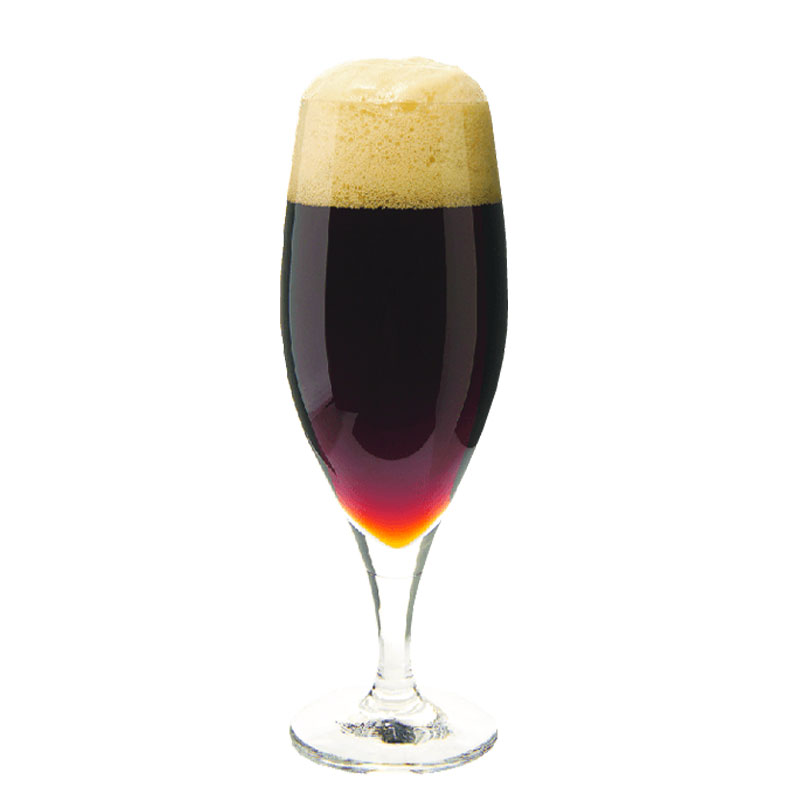
Dortmunder, sometimes called Dort but more often known as “export,” is a golden German lager. Export originated in Dortmund, an industrial city in the north of Germany. In medieval times, this local style was exported widely throughout the Westphalia region and across the border in the Netherlands, which is how it got the “export” nickname. Despite the implication, this style is not widely known or promoted. Once considered to be a blue-collar beer, its image has suffered in recent years. These days, it simply fills a niche — like schwarzbier, rauchbier and dunkel, styles all overshadowed by the nation’s popular pilsner, Oktoberfest and wheat beers.
Export is heavier-bodied than a pilsner, with less hops, more alcohol and higher original and final gravities. It has a rich malt aroma, a firm malty body with a bittersweet finish, and a late burst of hops. The guidelines for Dort are as follows: The original gravity ranges from 1.048 to 1.056; the alcohol by volume is between 5 and 6 percent; the bitterness is at 29 IBUs; and the color is 3 to 5 SRM.
The best-known examples come from Dortmunder Actien Brauerei (DAB) and Dortmunder Union, both in Dortmund. Each of these beers is clean and flavorful. The alcohol is evident, more so than in a pilsner, but they finish smooth and malty.
Several American breweries produce the style as well, but two great beers always come to mind: Great Lakes Dortmund Gold (made by Great Lakes Brewing Company in Cleveland, Ohio) and Stoudt’s Gold (by Stoudt Brewing Company in Allentown, Pennsylvania). The Great Lakes Gold has won multiple medals, including a gold from the GABF and four “world champion” titles from the World Beer Championships. It’s grainy and dry with an aroma of newly mown hay. The alcohol by volume is 5.8 percent and the bitterness is 30 IBUs.

If you’re brewing your Dort with extract, try to find a pilsner malt extract or something with a pilsner and light Munich combination, like Bierkeller Light. Why? Because we are essentially brewing a strong pilsner. We’ll add some light caramel malt in a grain bag for more color and flavor, but the base needs to remain fairly light; remember, the color is only 3 to 5 SRM. Aside from that, you want the distinctive malt flavor that comes from good German extracts.
For mashing, we’ll stick with our standard single-infusion technique, although decoction mashing may appeal to purists. Remember: Decoction mashing will yield more color and make your beer darker.
Typical hops for the Dortmund export style are Hallertau, Saaz, Tettnang or various combinations of them. Great Lakes Brewing uses a rather unique combination of Cascade and Hallertau. Other German hops like Spalt, Brewer’s Gold or Hallertau Hersbruck will probably work, as well.
Since this is a lager, normal procedure should be followed. Use either the simplified lager schedule listed in this recipe (and often employed in this column) or the longer lagering schedule from the Oktoberfest we brewed in June (see Brew Your Own, Summer 2000).
The yeast can vary a bit, but some of the best strains to use for this style are German and Munich lager yeast. Kolsch yeast can even be used to produce a good Dortmunder. I have used the Wyeast 2565 in my homebrew recipe with great results, although some people might find it a little dry for their taste. White Labs also sells a kolsch yeast (WLP-029), but I haven’t had a chance to try it.

The grain bill is composed of American two-row, with carapils for body and Belgian cara-Vienne (40° Lovibond). The hops are Tettnang for bittering and Hallertau to finish.
Dortmunder (German Export)
(5 gallons, extract with grain) OG = 1.052 FG = 1.012 IBU = 25
Ingredients
- 6 lb. Bierkeller pale malt extract syrup
- 1 lb. carapils or dextrin malt
- 0.5 lb. crystal malt (20° Lovibond)
- 5.6 AAU Tettnang hops (1.25 oz. at 4.5% alpha-acid)
- 1.75 AAU Hallertau hops (0.5 oz. at 3.5% alpha-acid)
- 2 pt. starter of Munich or German lager yeast (Wyeast 2308, White Labs WLP-830 or equivalent)
- 3/4 cup corn sugar for priming
Step by Step
Steep crushed grain in 5 gallons of 150° F water for 30 minutes. Sparge grains with enough 168° F water to make 5.5 gallons. Heat to boiling and add extract syrup. Total boil will be 60 minutes. At beginning of boil, add Tettnang hops and continue for 45 minutes. Add Hallertau and boil remaining 15 minutes. Whirlpool and cool to 50° F to pitch starter. Oxygenate-aerate well. Ferment at 50° F for 7 days, transfer to secondary and cool to 45° F. Ferment for 7 more days or until gravity is about 1.012 and fermentation stops. Cool to 40° F for 3 more days. Rack, prime and bottle condition at 50° F for another week before drinking.
All- grain option:
Omit the extract syrup and reduce first hop addition to 5.06 AAU (1.125 oz. at 4.5% alpha acid). Mash 8.5 lbs. pale pilsner malt (Ireks or Weyermann) along with the other grains in 3 gallons of 150° F water for 30 minutes. Sparge with enough 168° F water to collect 5.75 gallons of wort. Total boil time is 90 minutes. Add Tettnang at start of boil. In 75 minutes add Hallertau and boil final 15 minutes. Proceed as above for fermentation.