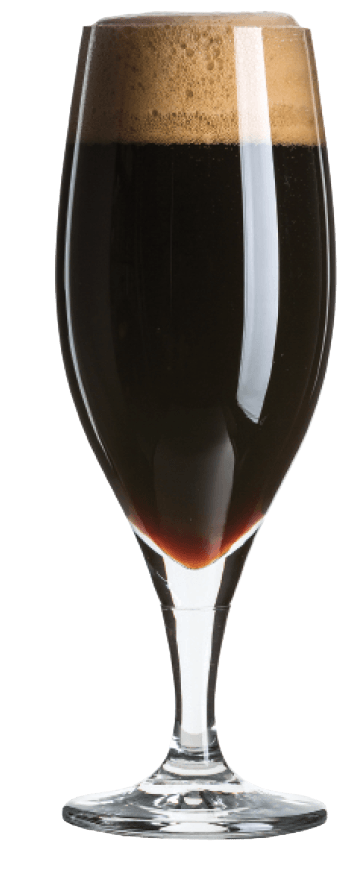
Euro Pale Lager
Author Terry Foster offers a European pale lager recipes for readers with a simple grain bill and clean lager yeast to allow the beer to focus on the Tettnang and Saaz hop profile.
Euro Pale Lager, All-Grain
(5 gallons/19 L, all-grain)
OG = 1.058 FG = 1.013
IBU = 27 SRM = 5 ABV = 5.9%
Ingredients
12 lbs. (5.4 kg) Pilsner malt
4.4 AAU German Tettnang hop pellets (90 min.) (1 oz./28 g at 4.4% alpha acids)
4.4 AAU German Tettnang hop pellets (0 min.) (1 oz./28 g at 4.4% alpha acids)
3 AAU Czech Saaz hop pellets (0 min.) (1 oz./28 g at 3% alpha acid)
2 packs Wyeast 2124 (Bohemian Lager) or White Labs WLP830 (German Lager) yeast
3⁄4 cup corn sugar (if priming)
Step by Step
Mash the grains with 14 qts. (13 L) hot water to achieve 152–154 °F (66.7–67.8 °C) in the tun. Hold 60 minutes, run off wort and sparge to collect 6 gallons (23 L), and bring to a boil. Add first portion of German Tettnang hops and boil the wort for 90 minutes.

When the boil is finished, turn off the heat and add the second portion of German Tettnang and the Saaz hops. Let the wort stand for 30 minutes, run wort off trub, cool to 40–45 °F (4.4–7.2 °C) and pitch yeast, preferably as a 2-qt. (2-L) starter. Maintain this temperature for seven days, then bring up to about 65 oF (18 oC) for 3-4 days (diacetyl rest). Rack to secondary and lager at 32–35 °F (0–2 °C) for three to four weeks, then rack and bottle or keg as usual.
Euro Pale Lager, Extract
(5 gallons/19 L, extract only)
OG = 1.057 FG = 1.013
IBU = 27 SRM = 7 ABV = 5.7%
Ingredients
6 lbs. (2.7 kg) Pilsen liquid malt extract
1.5 lbs. (0.68 kg) Pilsen dried malt extract
4.4 AAU German Tettnang hop pellets (90 min.) (1 oz./28 g at 4.4% alpha acids)
4.4 AAU German Tettnang hop pellets (0 min.) (1 oz./28 g at 4.4% alpha acids)
3 AAU Czech Saaz hop pellets (0 min.) (1 oz./28 g at 3% alpha acid)
2 packs Wyeast 2124 (Bohemian Lager) or White Labs WLP830 (German Lager) yeast
3⁄4 cup corn sugar (if priming)
Step by Step
Dissolve the dried malt extract (DME) and about one third of the liquid malt extract (LME) in 2–3 gallons (7–11 L) of warm water, stirring carefully to make sure all the extract is properly dissolved, then top up the volume to 5 gallons (19 L). Bring the wort to a boil and add the first portion of Tettnang hops at the start.
Boil for 60 minutes, adding the remainder of the LME 15 minutes before the end of the boil. At the end of the boil, turn off the heat, add the second portion of Tettnang and the Saaz hops, and allow the wort to rest for 30 minutes. Let the wort stand for 30 minutes, run off the trub, cool to 40–45 °F (4.4–7.2 °C) and pitch yeast, preferably as a 2 qt. (2 L) starter. Maintain this temperature for 7 days, then bring up to about 65 °F (18 °C) for three to four days (diacetyl rest). Rack to secondary and lager at 32–35 °F (0–2 °C) for three to four weeks, then rack and bottle or keg as usual.
Tips for Success: You could do a decoction mash with this if you wish — this recipe is about the hops after all. A decoction mash would be historically accurate, and might produce some subtle differences, but I find a simple infusion works well as long as you choose a good quality Pilsner malt.
For extract brewers, be sure to choose high quality malts that you know are fresh. Be sure to ferment this with a healthy population of yeast. For the yeast strains suggested here, shoot for around 400 billion cells, which is easily achieved by making a simple yeast starter 24 hours before brew day. If you do not want to make a starter, you can also use multiple yeast packs. .